
Food-Contact HTV Silicone: Document Kit for FDA 21 CFR 177.2600 Compliance
Food-Contact HTV Silicone: Document Kit for FDA 21 CFR 177.2600 Compliance
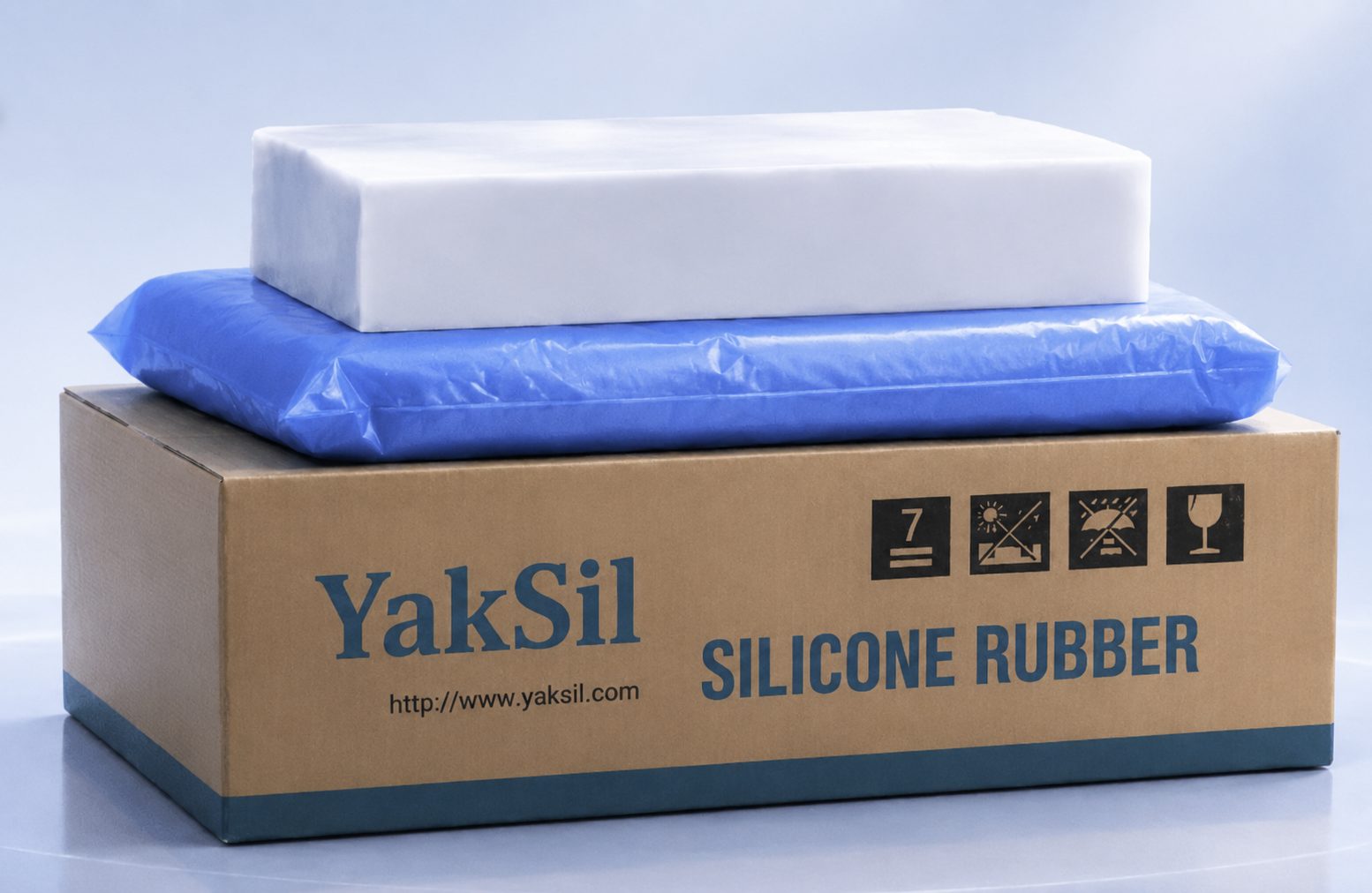
YKS-8850 is a food-contact grade HTV/HCR silicone base compound produced by Yakows Technology (Dongguan) Co., Ltd. It is a 50 Shore A, peroxide-curing compound supplied without pigment or curing agent, and supporting third-party test documentation according to US FDA 21 CFR 177.2600 is available upon request. For a procurement team in the research and evaluation stage, the decisive question is rarely whether a supplier writes “FDA compliant” in an email. It is which documents actually exist, who issues them, which grade and batch they cover, and which parts of the file only the molder can complete. This article sets out the document kit to request for YKS-8850, the parameters that belong in the technical file, and the review sequence that prevents a compliance gap from appearing after the purchase order.
Problem Definition: A Compliance Claim Is Not a Compliance File
Food-contact silicone sourcing usually starts with a short claim. A supplier states that the material is “FDA grade” or “food grade” and attaches a one-page data sheet. The buyer forwards it internally, the project advances, and the gap only appears later, when a customer questionnaire, a retailer audit, or an export document review asks for evidence that was never collected.
The root cause is a category error: documents are treated as one item rather than four distinct levels. A food-contact HTV silicone compound is supported by evidence at four levels, and each level answers a different question.
- Grade level — what the compound is, what it measures, and how it should be processed. This is the technical data sheet (TDS) and the safety data sheet (SDS).
- Test level — what third-party testing according to a named standard has been performed on the applicable grade. For US food-contact use, this is the documentation set relating to FDA 21 CFR 177.2600.
- Batch level — what this specific delivery measured. This is the batch certificate of analysis (COA).
- System level — how the supplier controls production, inspection, and traceability. This is the quality management system certificate, for example ISO 9001.
None of these four levels substitutes for the others. A TDS with a tensile value does not demonstrate food-contact testing. An ISO 9001 certificate does not describe a compound. A batch COA does not tell you whether the formulation was tested for food-contact conditions. When all four are requested together — before sampling, not after ordering — the evaluation becomes a document review rather than a trust exercise.
There is a second, more important boundary. HTV silicone for food contact is normally sold as a base compound. YKS-8850 is supplied without pigment or curing agent. That means the colorant and the curing system are introduced by the processor, and they become part of the finished molded article. Any document file that ignores this split will overstate what the compound documentation proves.
Industry Background: Why Documentation Is Now a Gating Item
Silicone rubber is a large and still-expanding material category, which means buyers have many suppliers to choose from — and a wide variation in how much documentation those suppliers can produce. The global silicone rubber market was valued at USD 5.7 billion in 2025, with HTV silicone rubber holding a 45.2% market share (Vertex AI Search / Cloud Google). Within the HTV segment itself, solid HTV silicone rubber accounted for 58.3% of that segment in 2025 (Dataintelo). Most of that volume is general-purpose compound sold on hardness and price, not on application-specific documentation.
Food-contact grades sit in a different part of the market from general-purpose grades. They also sit apart from other application grades: an electrical insulation grade is formulated and tested for dielectric strength, hydrophobicity, and tracking resistance, none of which describes food-contact suitability. Food-contact qualification is instead driven by the regulatory framework of the destination market. In the United States, rubber articles intended for repeated use in contact with food fall under FDA 21 CFR 177.2600, which is why US-facing buyers ask for documentation specifically tied to that section rather than for a general “food safe” statement.
The practical consequence for procurement is that documentation maturity has become a supplier selection criterion in its own right. A supplier that can only issue a TDS forces the buyer to commission testing, absorb the lead time, and carry the technical risk. A supplier that can issue a grade-specific document set shortens the qualification cycle, because the buyer is reviewing evidence rather than generating it.
Yakows Technology (Dongguan) Co., Ltd. is a manufacturer of high-performance HTV/HCR silicone rubber compounds established in 2020, operating a 5,000 m² facility with 50 employees, including more than 10 engineers and technicians in formulation development, testing, and application support. Monthly production capacity ranges from approximately 400,000 to 1,000,000 kg depending on grade and schedule, and approximately 70% of output is supplied to overseas customers in Southeast Asia, the Middle East, Eastern Europe, Latin America, and North America. That export orientation is the reason its documentation practice is organized around named grades, batch records, and market-specific test documents rather than around generic marketing statements.
The YKS-8850 Document Kit: Four Layers, Nine Documents
The document set below applies to YKS-8850 and to other applicable Yakows product grades. Food-contact documentation is issued on request and is tied to the grade and the intended application, so the request should always name both.
Layer 1 — Grade-Level Technical Documents
The current TDS for YKS-8850 documents the compound's identity and its measured properties. Hardness is 50 ± 3 Shore A (GB/T 531.1-2008) and density is 1.14 ± 0.03 g/cm³ (GB/T 533-2008). Plasticity is 250–280 (GB/T 12828-2006). Tensile strength is at least 7.0 MPa with elongation at break of at least 700% (GB/T 528-2009). Tear strength is at least 18 kN/m on a right-angle specimen (GB/T 529-2008), resilience is at least 40% (GB/T 1681-2009), and linear shrinkage by the molding method is 2.7–3.2% (GB/T 1692-2008). Appearance is milky white to slightly yellow.
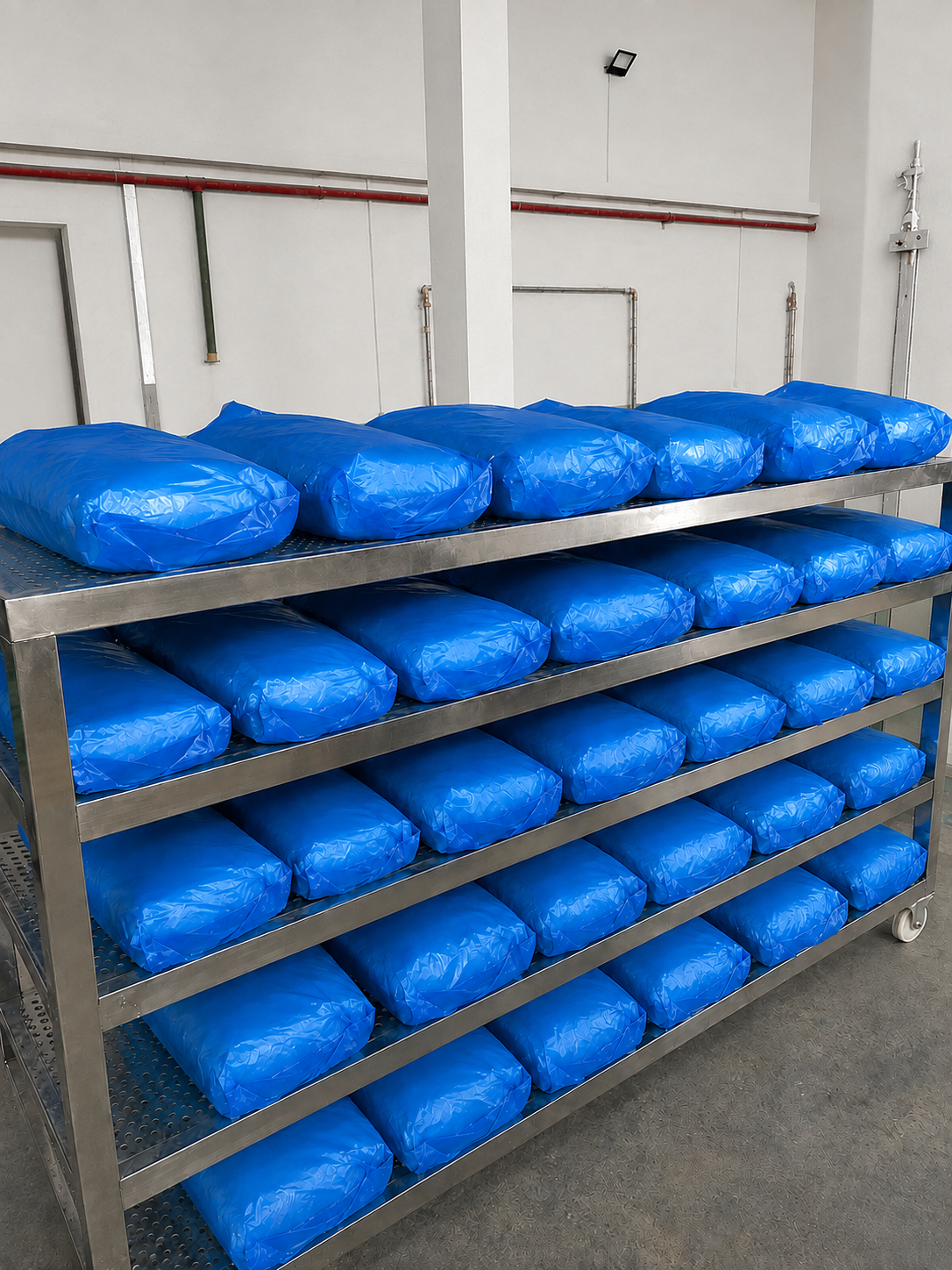
The same document carries the processing and logistics data that a production engineer needs before a trial: a recommended molding cure of 180 °C × 5 minutes, a recommended curing agent of DBPMH 35% active preparation at a dosage of 1.5% by weight, standard packaging of 20 kg net per carton, a recommended storage temperature of no more than 30 °C, and a shelf life of 6 months in the original unopened packaging.
The SDS is the second grade-level document. It covers handling, storage, and transport information. It is a safety document, not a food-contact document, and should not be filed as evidence of food-contact suitability.
Layer 2 — Food-Contact and Regulatory Documents
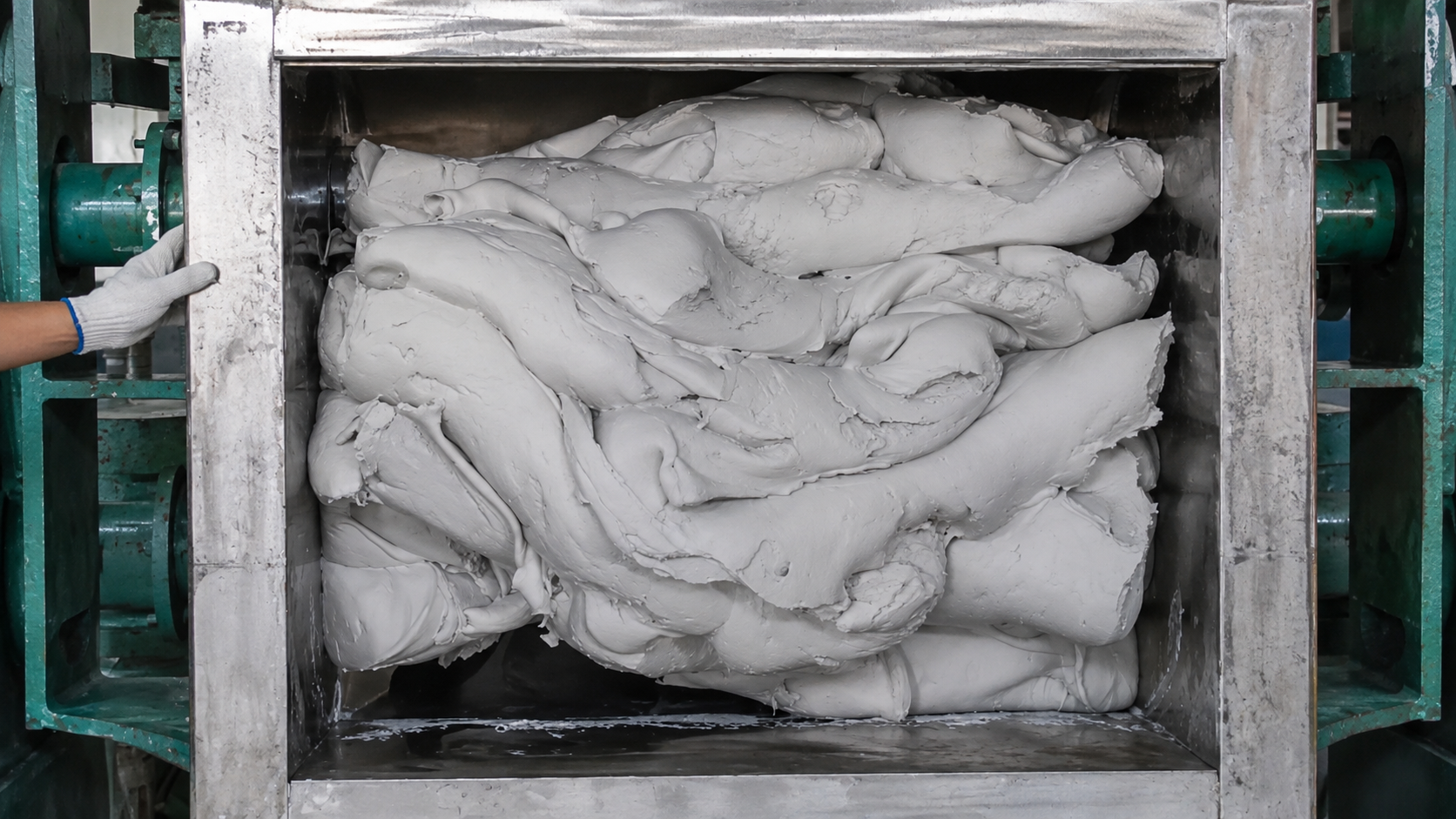
For YKS-8850, supporting third-party test documentation according to US FDA 21 CFR 177.2600 is available upon request. In addition, applicable product grades are supported by FDA food-contact compliance documentation, LFGB test reports, REACH compliance documentation, and other relevant certificates according to the intended application.
Three practical rules apply here. First, request the documentation against the exact grade — the file for YKS-8850 is not interchangeable with the file for an electrical insulation grade such as YK-3160, because the formulations and the test scopes differ. Second, state the intended use and market, since LFGB reports and REACH documentation are relevant to different destination requirements. Third, read the document as a compound-level statement. It describes the material supplied in the carton, not the molded article produced from it.
Layer 3 — Batch-Level Documents
Two COA formats are relevant. A Typical COA shows representative values for the grade and is useful during evaluation, when the buyer is comparing typical performance against minimum limits. A batch COA shows the measured results for one production batch and is the only document that links a delivery to a specific manufacturing record.
Each production batch of the food-contact compound is inspected for appearance, Shore A hardness, density, tensile strength, elongation, tear strength, and applicable properties. A batch COA can be provided before shipment, which allows incoming inspection to be planned against known values instead of discovering a deviation on the production floor.
Layer 4 — Quality-System and Supplier Documents
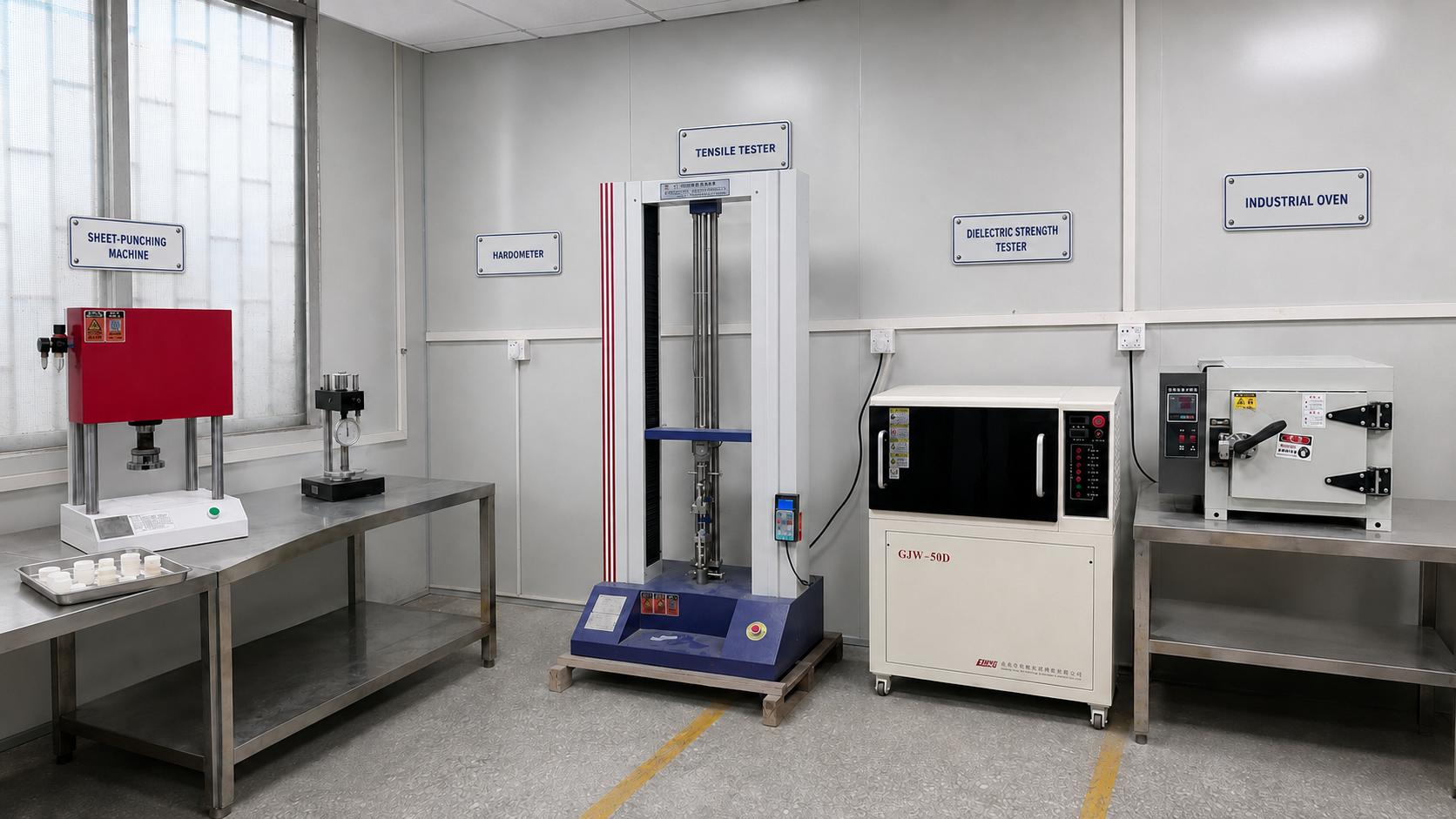
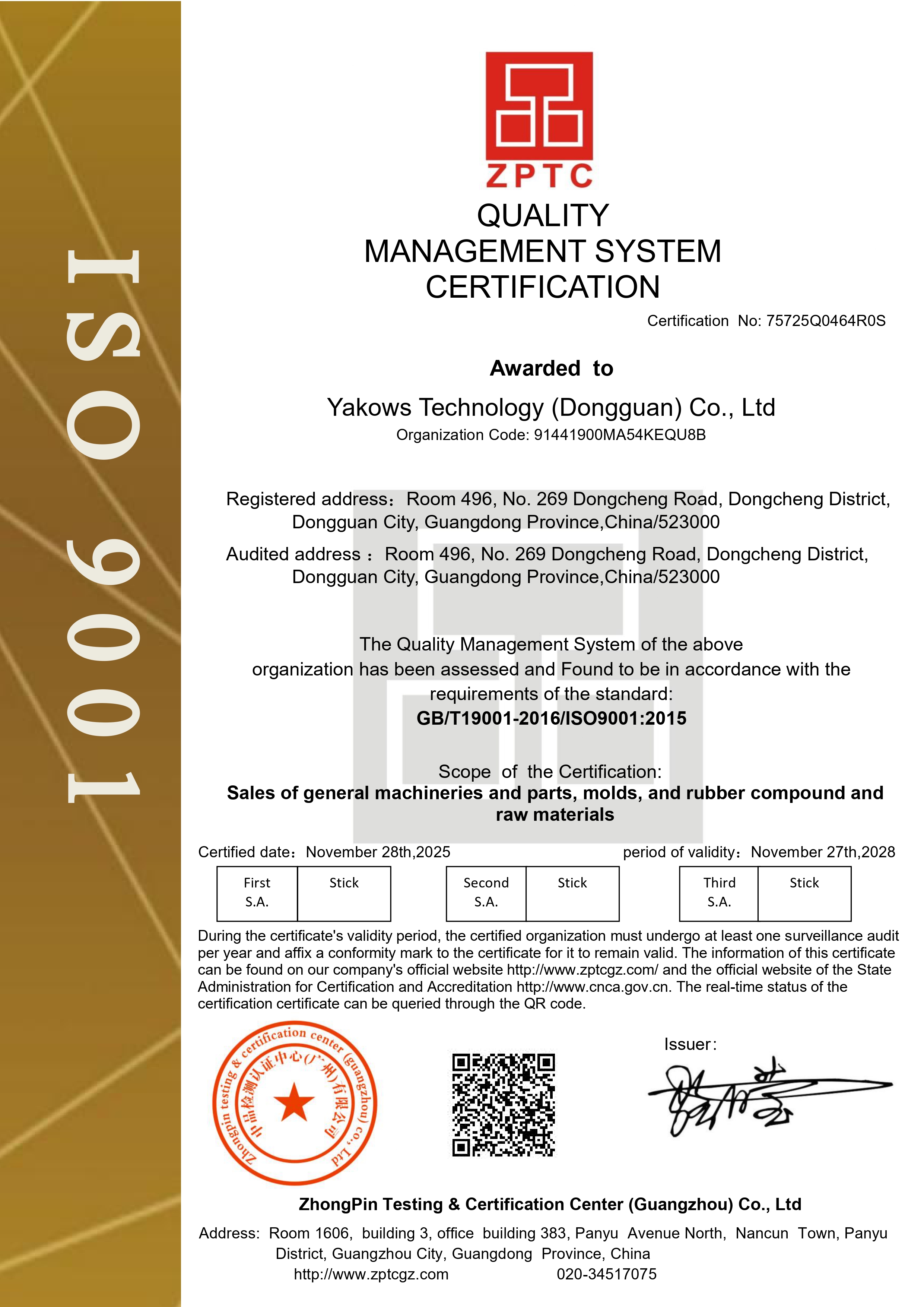
The supplier-level document is the ISO 9001 certificate. Yakows holds certification number 75725Q0464R0S, issued by ZhongPin Testing & Certification Center (Guangzhou) Co., Ltd. against GB/T19001-2016/ISO9001:2015, valid for the worldwide market from 28 November 2025 to 27 November 2028. The certified scope covers sales of general machineries and parts, molds, and rubber compound and raw materials.
Read the scope statement carefully. A quality management system certificate confirms that the supplier operates a controlled, auditable process within the stated scope. It does not certify the food-contact performance of a specific compound. Buyers who need both will request the ISO 9001 certificate for supplier qualification and the FDA 21 CFR 177.2600 documentation for material qualification, and file them separately.
| Document | What it documents | Where it fits in evaluation | What it does not prove |
|---|---|---|---|
| Grade-specific TDS (YKS-8850) | Hardness, density, plasticity, tensile, elongation, tear, resilience, shrinkage, cure recommendation, packaging, storage, shelf life | Confirming the grade suits the mold, press, and demolding requirements | Food-contact suitability of the finished article |
| SDS | Handling, storage, and transport information for the base compound | EHS review and warehouse condition planning (≤ 30 °C storage) | Food-contact status of the material |
| Typical COA | Representative measured values for the grade | Comparing typical performance with the guaranteed values in the TDS | Results for the batch you will actually receive |
| Batch COA | Inspection results for one production batch: appearance, Shore A hardness, density, tensile, elongation, tear, applicable properties | Incoming inspection planning, traceability, and batch release | Design or compliance of the molded part |
| Third-party test documentation per US FDA 21 CFR 177.2600 | Food-contact related testing of the applicable grade, available upon request | The US food-contact section of the material approval file | Compliance of the molded article as produced by the processor |
| LFGB test reports | Food-contact testing for applicable grades | Evaluation against German/EU-market oriented requirements | Anything outside the tested scope |
| REACH compliance documentation | Regulatory status documentation for applicable grades | EU chemical compliance review of the material | Food-contact performance |
| ISO 9001 certificate (no. 75725Q0464R0S) | Quality management system certification within the stated scope | Supplier qualification and audit preparation | Material-specific food-contact performance |
Step-by-Step Breakdown: Building the Evaluation File
The sequence below is designed for a buyer moving from research into evaluation, where the goal is to approve a grade and a supplier before the first production order.
- Define the finished article first. Write down what will be molded (bakeware, a kitchenware part, a flexible mold, a gasket or seal), how it will be used, and which market it will be sold into. Every document request afterward is filtered through this definition.
- Request the current TDS and check process fit. For YKS-8850, verify that 50 ± 3 Shore A, plasticity 250–280, and linear shrinkage of 2.7–3.2% are compatible with your mold and press, and confirm the recommended cure of 180 °C × 5 minutes against your existing cycle. Mismatched shrinkage is a common cause of rejected first trials.
- Request the SDS and confirm storage conditions. The compound should be stored at no more than 30 °C and has a shelf life of 6 months in the original unopened packaging. Confirm that your warehouse can meet this before you commit to a large first order.
- Request the food-contact documentation set and name your market. Ask specifically for third-party test documentation according to US FDA 21 CFR 177.2600 for YKS-8850, and additionally for LFGB test reports or REACH compliance documentation where applicable to your destination market.
- Request the quality-system certificate and read the scope. ISO 9001 certificate 75725Q0464R0S applies worldwide and covers sales of general machineries and parts, molds, and rubber compound and raw materials. Confirm the scope covers the activity you are buying.
- Run a trial with your own additives. Because YKS-8850 is supplied without pigment or curing agent, the trial should use the colorant and the curing system you intend to use in mass production, with DBPMH 35% active preparation at 1.5% by weight as the recommended starting point. Record cure temperature, cure time, and demolding behavior.
- Lock batch-level documentation into the purchase terms. Specify that a batch COA is provided before shipment for each lot, covering appearance, Shore A hardness, density, tensile strength, elongation, tear strength, and applicable properties.
- Maintain the file as a controlled document set. Keep the TDS version, the test documents, the supplier certificate, and the batch COAs for each delivery together, so that a later audit can trace any shipment back to its evidence.
Use Cases: Where the Chain of Custody Matters Most
Bakeware and kitchenware. These are the applications where the finished article is most visible to the end consumer and where retail and marketplace compliance questionnaires are most likely to be issued. The document file needs to be complete at the grade level and the batch level, because a retailer may ask for evidence for a specific shipment.
Flexible molds. Food-contact molds are often produced in low-to-medium volumes with repeated design changes. The high elongation of YKS-8850 (at least 700%) and tear strength of at least 18 kN/m are relevant to demolding complex cavities, while the 6-month shelf life and 20 kg carton format support repeated small production runs without excessive inventory.
Gaskets and seals. Sealing components are usually the part of a food-contact assembly that is hardest to replace once a production line is qualified. Buyers in this segment typically request the full document set up front, including the TDS, the food-contact test documentation, and batch COAs, so that an approved material can be reordered without repeating qualification.
General compression-molded food-contact products. For lower-risk items, the evaluation can be lighter, but the same rule applies: the file should contain the grade-level documents and the batch COA, and the buyer should know which document is missing if an audit requests more.
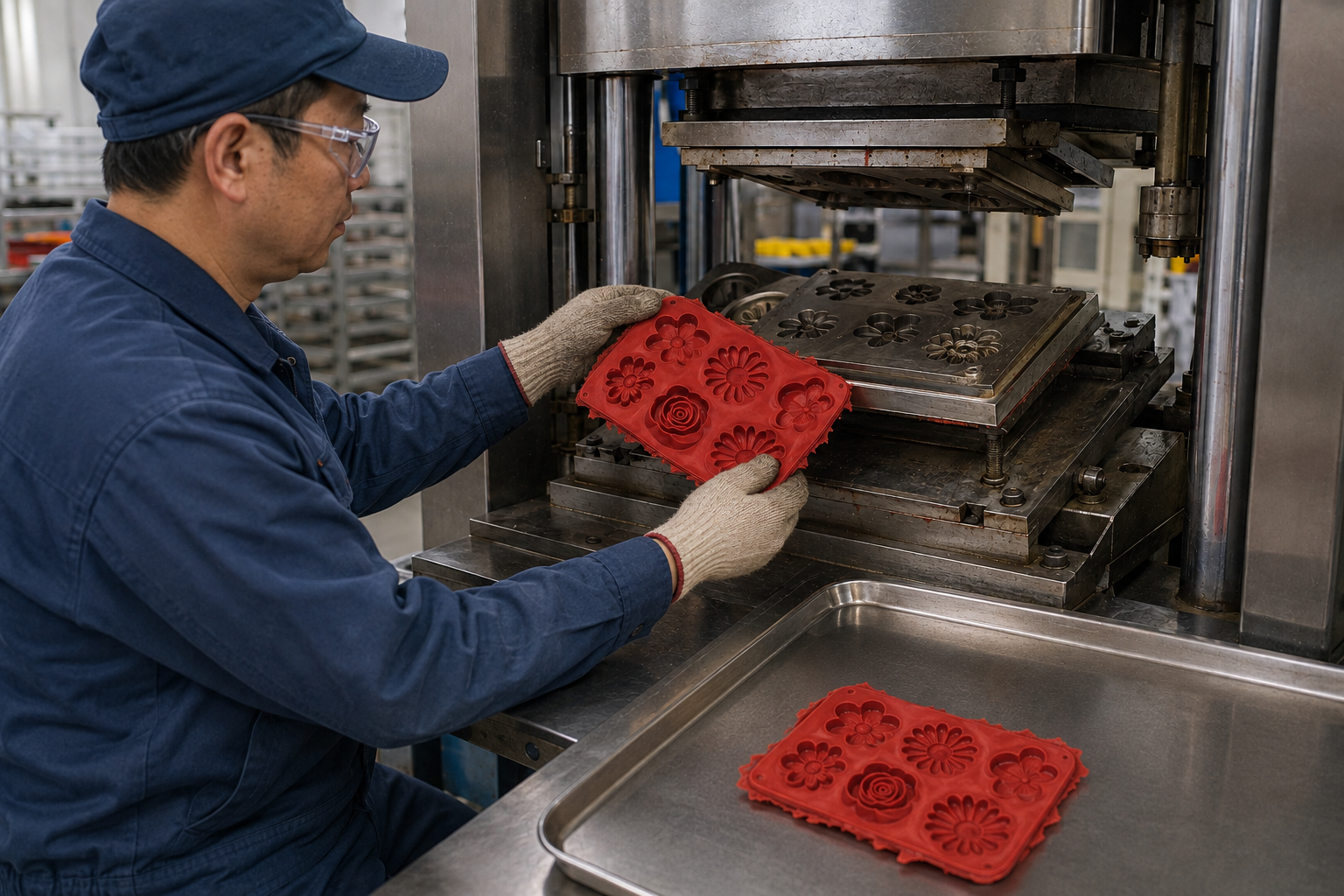
One requirement is common to all four cases. Because the compound is supplied without pigment, any brand color or product color is introduced by the molder. Colorants used in food-contact articles form part of the finished article and should be assessed by the processor alongside the base compound, not assumed to be covered by the compound documentation.
Base Compound vs. Finished Article: Who Documents What
The clearest way to prevent an over-claim is to map each element of the finished part to the party that supplies it. The table below separates what arrives in the YKS-8850 carton from what is added during processing.
| Element | Supplied in YKS-8850 | Added or confirmed by the molder | Effect on the document file |
|---|---|---|---|
| Silicone base compound | Yes — HCR/HTV base compound | — | Covered by the grade-level TDS and COAs |
| Pigment / color | No — supplied without pigment | Yes | Colorant must be assessed as part of the finished article |
| Curing agent | No — supplied without curing agent; DBPMH 35% active recommended at 1.5% by weight | Yes | Curing system selection is recorded in the trial report |
| Cure conditions | Recommended: 180 °C × 5 minutes | Confirmed on the actual mold | Trial results belong in the technical file |
| Packaging | 20 kg net per carton | — | Supports handling and inventory planning |
| Storage and shelf life | ≤ 30 °C, 6 months unopened | — | Supports FIFO control and shelf-life tracking |
| Finished-article compliance | Not established by compound documentation alone | Yes | Final product declarations remain with the finished-product manufacturer |
The last row is the one that procurement teams most often need to explain internally. Compound-level documentation, including third-party test documentation according to US FDA 21 CFR 177.2600, supports the material side of a food-contact file. It does not automatically transfer to the molded article, because the article includes the colorant, the curing system, and the process conditions chosen by the processor. Both halves of the file are necessary; only one of them can be supplied by the compound manufacturer.
FAQ
Does YKS-8850 come with documentation for US FDA 21 CFR 177.2600?
Yes. For YKS-8850, supporting third-party test documentation according to US FDA 21 CFR 177.2600 is available upon request. Applicable Yakows product grades are further supported by FDA food-contact compliance documentation, LFGB test reports, REACH compliance documentation, and other relevant certificates according to the intended application. Because food-contact documentation is grade-specific and application-specific, the request should name the exact grade, the intended food-contact use, and the destination market. It is also worth requesting the set during evaluation rather than after the purchase order, so the file can be reviewed before sampling begins.
Does food-contact documentation for the compound mean my finished molded product is compliant?
No. YKS-8850 is supplied without pigment or curing agent, so the colorant and the curing system are introduced by the processor and become part of the finished article. The recommended starting formulation is DBPMH 35% active preparation at 1.5% by weight with a molding cure of 180 °C × 5 minutes, but the actual colorant, curing system, and process conditions used in production are chosen by the molder. Compound-level documents support the raw-material portion of a food-contact file; compliance of the finished molded article has to be established for the actual formulation and process, and final product declarations remain the responsibility of the finished-product manufacturer.
What are the key technical parameters and cure conditions of YKS-8850?
YKS-8850 is a 50 ± 3 Shore A food-contact grade HTV/HCR base compound (GB/T 531.1-2008) with a density of 1.14 ± 0.03 g/cm³ (GB/T 533-2008) and a plasticity of 250–280 (GB/T 12828-2006). Tensile strength is at least 7.0 MPa and elongation at break is at least 700% (GB/T 528-2009); tear strength is at least 18 kN/m on a right-angle specimen (GB/T 529-2008); resilience is at least 40% (GB/T 1681-2009); and linear shrinkage by the molding method is 2.7–3.2% (GB/T 1692-2008). Appearance is milky white to slightly yellow. The recommended molding cure is 180 °C × 5 minutes using DBPMH 35% active preparation at 1.5% by weight. Standard packaging is 20 kg net per carton, recommended storage is at no more than 30 °C, and shelf life is 6 months in the original unopened packaging.
What determines the price of a food-contact HTV silicone compound, and what is the minimum order quantity?
The minimum order quantity for Yakows HTV/HCR compounds is 2,000 kg, and trial quantities may be discussed for product qualification. Within that framework, the main commercial variables are whether the grade is standard or a custom formulation, the hardness and performance targets, the color system (the base compound is supplied without pigment, so color is added in a separate step), the curing system, the scope of testing and documentation required, packaging format, order volume, and lead time. Monthly production capacity ranges from approximately 400,000 to 1,000,000 kg depending on product grade and production schedule, which means larger and more regular volumes can be planned into the production calendar rather than handled as one-off runs.
How quickly can I get a sample, and what is the lead time for production orders?
Standard grades are typically delivered within 3–7 working days, while customized grades take 10–20 working days after sample approval. Trial quantities may be discussed for product qualification, which allows a buyer to validate the compound on the actual mold, with the intended pigment and curing system, before committing to a 2,000 kg order. To request a sample, the technical data sheet, the food-contact documentation set, or a quotation for YKS-8850, contact the Yakows team at sales@yakows.com or by WhatsApp at +86 13549310838, and include the intended application, target market, and required hardness so the correct grade and document package can be prepared.
Conclusion: Request the File, Not the Claim
Food-contact HTV silicone procurement becomes manageable once the compliance claim is replaced by a four-layer document file. Grade-level documents (TDS and SDS) describe the compound and its processing. Test-level documents, including third-party test documentation according to US FDA 21 CFR 177.2600 which is available upon request for YKS-8850, address the food-contact question for the applicable grade. Batch-level COAs connect a specific delivery to measured results. System-level certification, such as ISO 9001 certificate 75725Q0464R0S held by Yakows Technology (Dongguan) Co., Ltd. against GB/T19001-2016/ISO9001:2015, qualifies the supplier and the process.
The remaining half of the file belongs to the molder: the pigment, the curing system, the cure conditions, and the finished-article assessment. A buyer who understands this split can evaluate a supplier in days instead of months, and can answer an audit question without returning to the supplier for evidence that should have been collected at the start.
Next Step
If you are evaluating a food-contact HTV/HCR base compound, the fastest way to close the loop is to request the sample and the document package together. Yakows Technology (Dongguan) Co., Ltd. supplies YKS-8850 with TDS, SDS, Typical COA, batch COA, and supporting third-party test documentation according to US FDA 21 CFR 177.2600 upon request.
Email: sales@yakows.com | WhatsApp: +86 13549310838 | Website: yaksil.com
Download the full product and capability overview: Yakows brochure (PDF)
Have Questions or Need More Details?
Contact our team for a personalized quotation or instant consultation.
Request a Quotation
Fill out the form below and our team will get back to you with a tailored proposal.
WhatsApp Direct Chat
Prefer to chat in real-time? Message us on WhatsApp for instant assistance & quick answers.
- Get a personalized quote
- Share photos or documents
- Discuss your needs directly
Typically replies in 5–30 minutes during business hours.