
Composite Insulator HTV Silicone: How to Verify the TM1A4.5 Tracking Claim
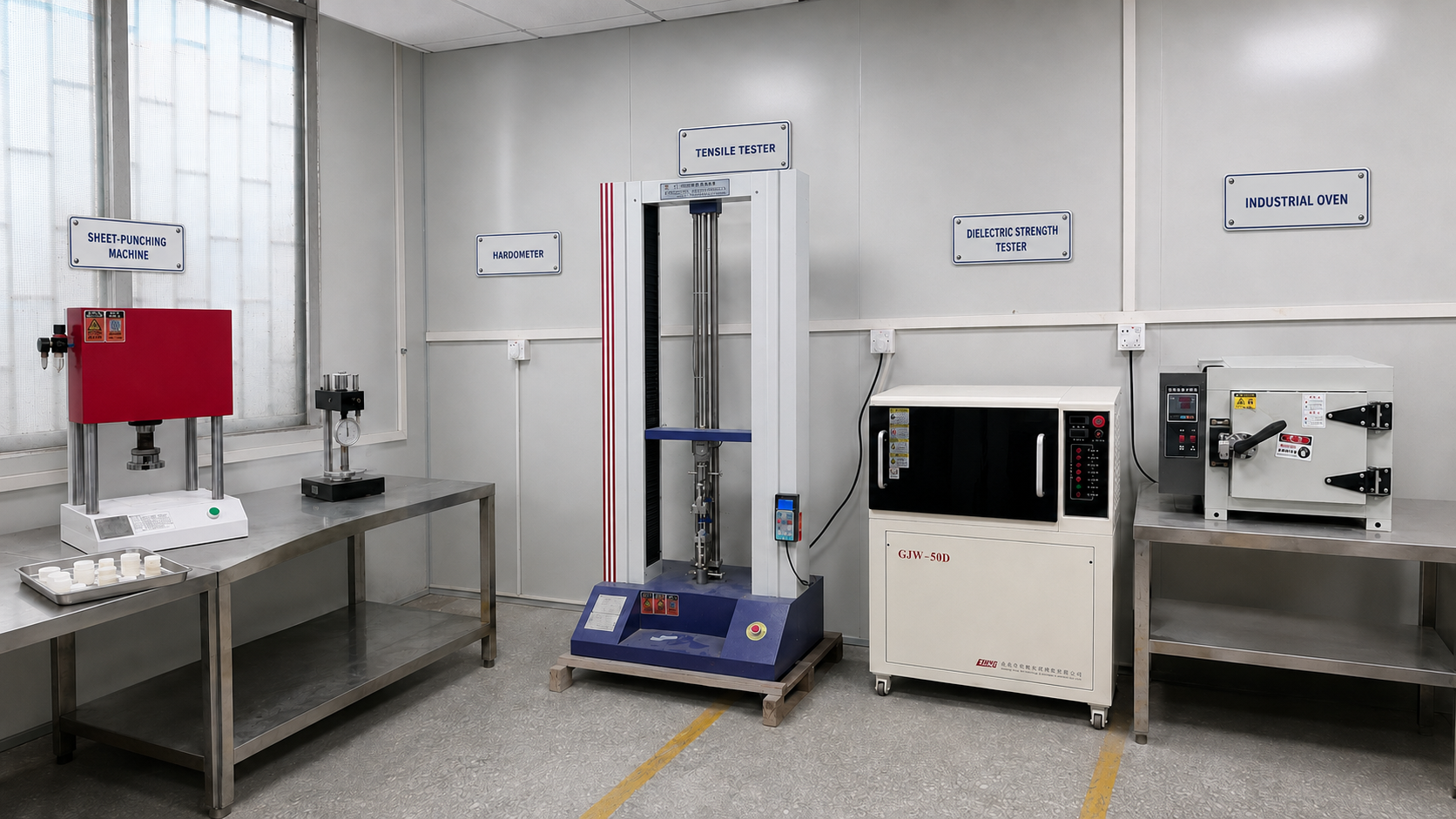
Composite insulators rarely fail because the material was the wrong colour or the wrong hardness. They fail because the housing surface eventually tracks, erodes, or loses its hydrophobicity under the combined pressure of moisture, pollution, and sustained electrical stress. Of every number printed on an HTV silicone rubber datasheet, the tracking and erosion classification carries the most consequence for outdoor high-voltage service — and it is the hardest one to confirm from a desk.
This article works through a single, concrete case: YK-3160, a High-Performance Electrical Insulation Grade HTV/HCR compound from Yakows Technology (Dongguan) Co., Ltd., developed for composite insulator housings and sheds. Its datasheet reports a tracking and erosion resistance of TM1A4.5 with a maximum erosion depth of 2.5 mm, alongside UV aging resistance, a V-0 flammability rating, dielectric strength of ≥22 kV/mm, volume resistivity of ≥2×10¹⁴ Ω·cm, and hydrophobicity of HC2.
Those figures are the starting point, not the conclusion. What follows is a verification method: how to read the classification, which documents to demand, which supporting properties to cross-check, and how to decide whether the claim survives contact with evidence.
Why Tracking and Erosion Is the One Claim You Cannot Take on Trust
Tracking and erosion resistance is a degradation property. A shore hardness, a specific gravity, or a compression set can be re-measured on a delivered sample within hours. Tracking resistance cannot. It emerges over an extended test period under a defined combination of electrical stress, surface contamination, and moisture — the same conditions that in the field appear only after months or years of service.
That difference creates four recurring sourcing problems:
- A datasheet value summarises a test; it is not the test. TM1A4.5 with a 2.5 mm maximum erosion depth is a reported outcome. Without knowing the standard, the method, and the specimen geometry behind it, the number is not comparable to another supplier's number.
- Classifications are only comparable under the same standard. If two suppliers measured tracking performance under different arrangements, the two labels describe two different experiments, not two competing materials.
- One passing test is not a promise about the next batch. A type test validates a formulation at a point in time. It says nothing about the shipment that will arrive next quarter unless batch-level control is documented.
- Field failures are expensive to reverse. Eroded sheds reduce effective creepage distance, and surface tracking can progress until the dielectric margin of the whole insulator is compromised. Replacement cost is measured in outage time, not material price.
Market and Standards Context Behind Tracking Verification
As HTV silicone rubber volumes grow, the number of suppliers quoting electrical insulation grades grows with them — and so does the variation in how rigorously those grades have been validated.
The scale of the category is significant. The global silicone rubber market was valued at USD 5.7 billion in 2025, with HTV silicone rubber holding a 45.2% share, according to Vertex AI Search / Cloud Google data. Within the HTV segment, solid silicone rubber accounted for 58.3% of the market in 2025, per Dataintelo. Trade data points the same direction: global silicone trade reached USD 8.51 billion in 2024, with China the second-largest exporter at USD 1.53 billion, according to the Observatory of Economic Complexity.
Upstream capacity has expanded quickly. China's silicone monomer production capacity reached 6.89 million tons in 2024, a 21.09% year-on-year increase, reported by Zhuochuang Information via IOTA. On the demand side, insulation-related applications continue to attract investment: the silicone rubber insulation coatings market is projected to reach USD 4.12 billion by 2035 at a CAGR of 5.73%, according to Market Research Future.
Standards are the stabilising factor. Composite polymer silicone rubber tension insulators must adhere to international standard IEC 61109 for safety and environmental performance, and silicone rubber for insulators has been subjected to 5,000-hour accelerated aging tests under IEC 61109 and IEC 62217, according to Gruppo Bonomi.
For a buyer, this context sets the expectation level: a serious electrical insulation supplier should be able to point to a recognised standard, a defined test arrangement, and a tracking or aging report — not only to a table of nominal values.
Reading the YK-3160 Datasheet as a Verification Plan
Any electrical grade datasheet can be converted into a verification plan by asking three questions of each line: what does this property control in service, what evidence would prove it, and who is qualified to produce that evidence?
Applied to YK-3160, the datasheet resolves into six verification targets.
| Property | YK-3160 Datasheet Value | What It Controls in Service | Evidence to Request |
|---|---|---|---|
| Tracking and erosion resistance | TM1A4.5; maximum erosion depth 2.5 mm | Surface degradation of housings and sheds under wet, polluted, electrically stressed conditions | Third-party type test report stating the applicable standard and specimen details |
| Flammability | V-0 | Resistance to ignition and flame spread on the housing surface | Flammability test report from a recognised laboratory |
| Dielectric strength | ≥22 kV/mm | Intrinsic dielectric margin of the compound before geometry is considered | Batch COA and laboratory test records |
| Volume resistivity | ≥2×10¹⁴ Ω·cm | Leakage behaviour and insulation stability under dry conditions | Batch COA and laboratory test records |
| Hydrophobicity | HC2 | Water repellency of the shed surface and recovery under contamination | Hydrophobicity classification test data |
| UV aging resistance | Declared for outdoor service | Long-term surface stability under sustained solar exposure | Accelerated UV aging report |
The tracking entry deserves the longest look. TM1A4.5 describes the outcome, while the 2.5 mm maximum erosion depth describes the physical damage produced during the same test. Both matter together. A shallow erosion depth at a given classification is what tells you the compound loses material slowly — and material loss is the mechanism that eventually thins the sheds and reduces effective creepage distance on an outdoor insulator.
The supporting values are not decoration. A V-0 flammability rating matters where arcing or external ignition sources are a realistic risk. Dielectric strength of ≥22 kV/mm and volume resistivity of ≥2×10¹⁴ Ω·cm describe the intrinsic insulating capability of the compound itself. A hydrophobicity classification of HC2 speaks to how the surface manages water, which directly influences pollution performance. UV aging resistance addresses the weathering side of long-term outdoor exposure.
What ties them together is consistency. A strong tracking classification paired with weak supporting values would be an unusual combination. When a supplier reports TM1A4.5, the surrounding figures should look like they came from the same material designed for the same duty.
A Seven-Step Verification Workflow for a TM1A4.5 Claim
Step 1 — Decode the classification before you compare it
Ask the supplier to state, in writing, the standard and the test method behind the classification. Until that is on record, treat TM1A4.5 as an internal label rather than a comparable property. Related standards in this field include IEC 61109 for composite polymer silicone rubber tension insulators and IEC 62217.
Step 2 — Request the third-party type test report
Ask specifically for the type test report issued by an independent laboratory — not a certificate of conformity, not an internal test sheet. The report should identify the specimen, the test arrangement, and the erosion result that corresponds to the 2.5 mm maximum erosion depth figure.
Step 3 — Cross-check the supporting properties against the same duty
Pull the flammability (V-0), dielectric strength (≥22 kV/mm), volume resistivity (≥2×10¹⁴ Ω·cm), hydrophobicity (HC2) and UV aging data into a single comparison sheet. If any supporting value is missing or unexplained, that gap is itself a finding worth raising before commercial terms are agreed.
Step 4 — Confirm batch-level control, not only a type approval
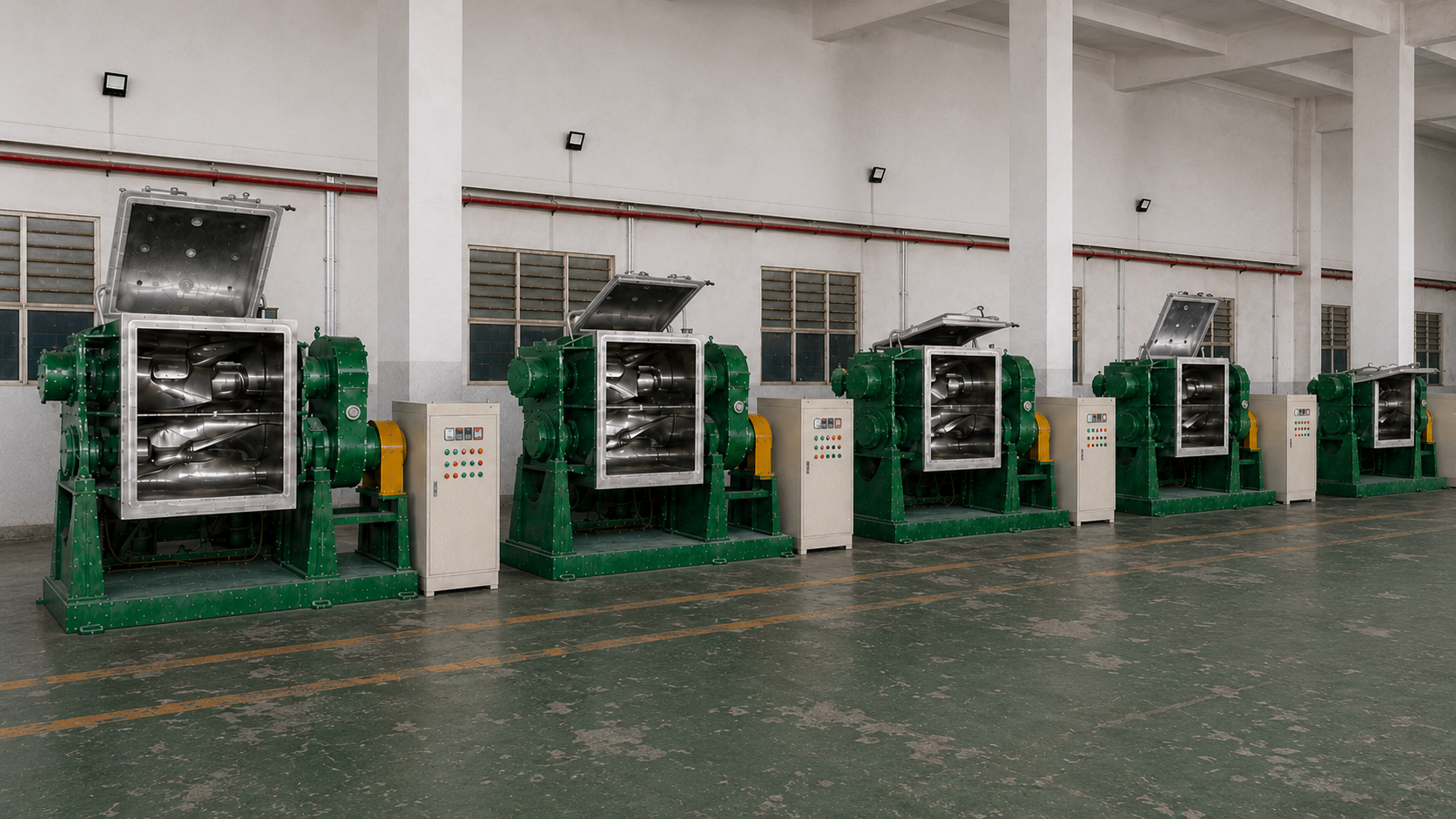
A type test proves the formulation once. It does not prove the shipment you will receive. Ask how batch-to-batch quality is controlled against the agreed specification, and request a typical COA plus a batch COA. Yakows Technology (Dongguan) Co., Ltd. states that grade-specific documents including TDS, SDS, typical COA, batch COA, and applicable third-party test reports can be provided to support customer evaluation and product approval.
Step 5 — Verify traceability from raw material to packaging
Traceability is what makes a later claim checkable. A supplier should be able to connect a delivered batch back through in-process testing to raw-material control, and forward to the packaging and container record. Without that chain, a field question months later has no answer.
Step 6 — Validate the compound on your own process
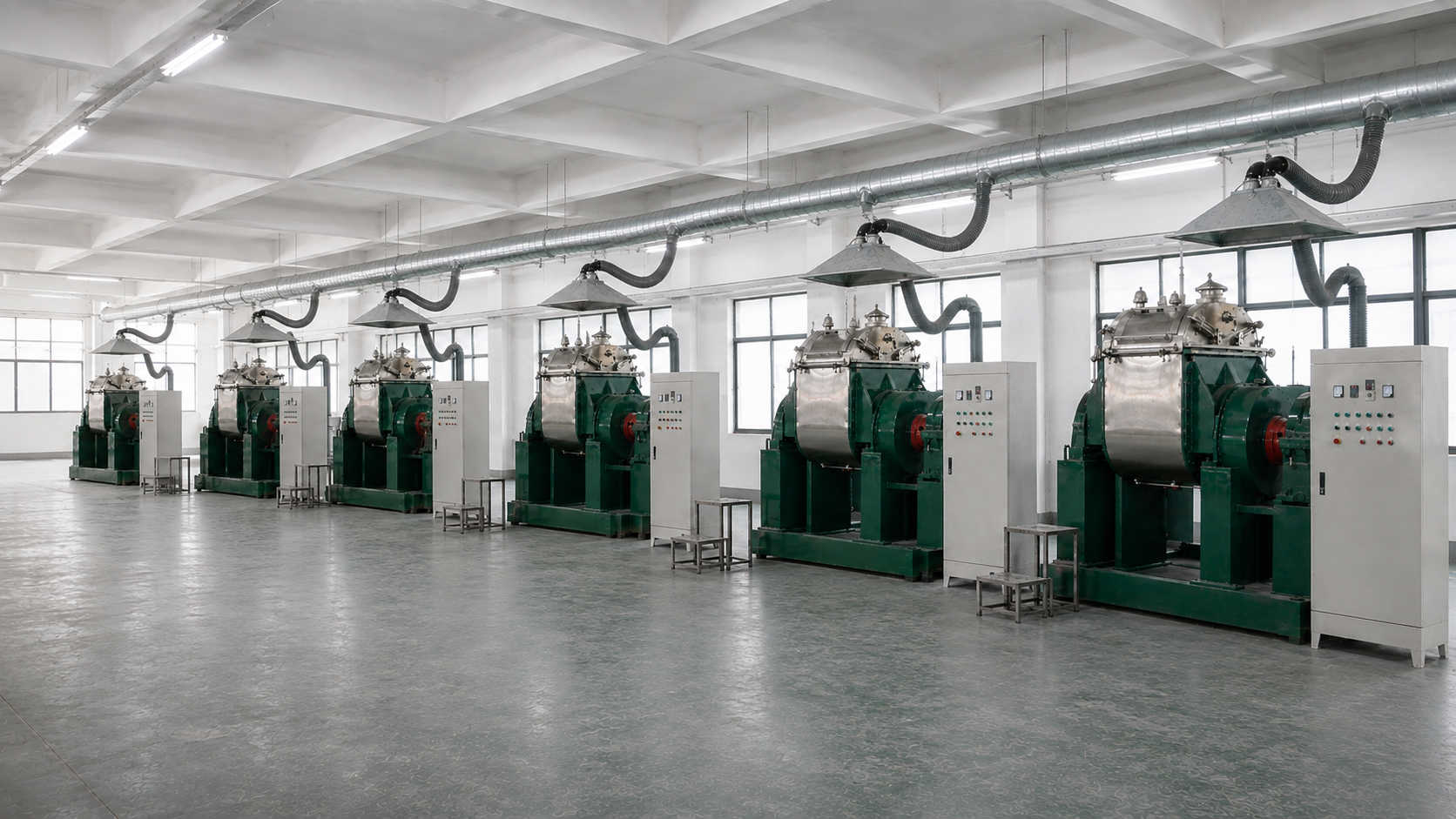
Tracking performance is created by formulation, but it is delivered through processing. A sample trial on your own mixing and moulding equipment shows whether the compound cures consistently, releases cleanly, and holds shed geometry at your parameters. This is the step where a paper-qualified material becomes a production-qualified one.
Step 7 — Write the verification into the commercial terms
Translate each verified property into an acceptance criterion in the purchase agreement. A claim that is not written into acceptance criteria cannot be enforced at incoming inspection, and disputes about surface quality become arguments about recollection rather than documents.
Where Verified Tracking Performance Changes the Procurement Decision
Verification effort pays back most where the material faces sustained wet electrical stress and maintenance access is limited.
Outdoor composite insulators. The housing and sheds are the primary barrier between the environment and the load-bearing core. A tracking classification that has been independently evidenced, rather than self-declared, reduces the risk that a surface degradation issue appears during the service window.
Hollow core insulators. Hollow core designs combine a large internal volume with an external housing that must retain hydrophobicity under contamination. Hydrophobicity (HC2) and tracking performance are read together here, because water behaviour on the surface drives the electrical stress that the surface must then survive.
Cable accessories. HTV silicone rubber is also used in cable accessories, where stress control and long-term surface stability are equally relevant. Insulation-grade compounds developed for housings and sheds share the same underlying requirement: predictable electrical behaviour over years, not weeks.
Coastal, industrial and polluted environments. Where airborne contamination and moisture combine, the tracking and erosion classification stops being a technical detail and becomes the parameter that determines whether the specified creepage distance stays meaningful in service.
Customized Versus Standard Grade: What the Comparison Actually Shows
The most common comparison a procurement team runs is between a customized, application-specific compound and a standard general-purpose HTV grade. The table below summarises the difference using Yakows' own comparison of its customized HTV silicone rubber against standard general-purpose material.
| Dimension | YAKOWS Customized HTV Silicone Rubber | Standard General-Purpose HTV Silicone Rubber |
|---|---|---|
| Formulation approach | Application-specific formulation development based on the customer's processing conditions and performance requirements | Fixed specifications with limited customization |
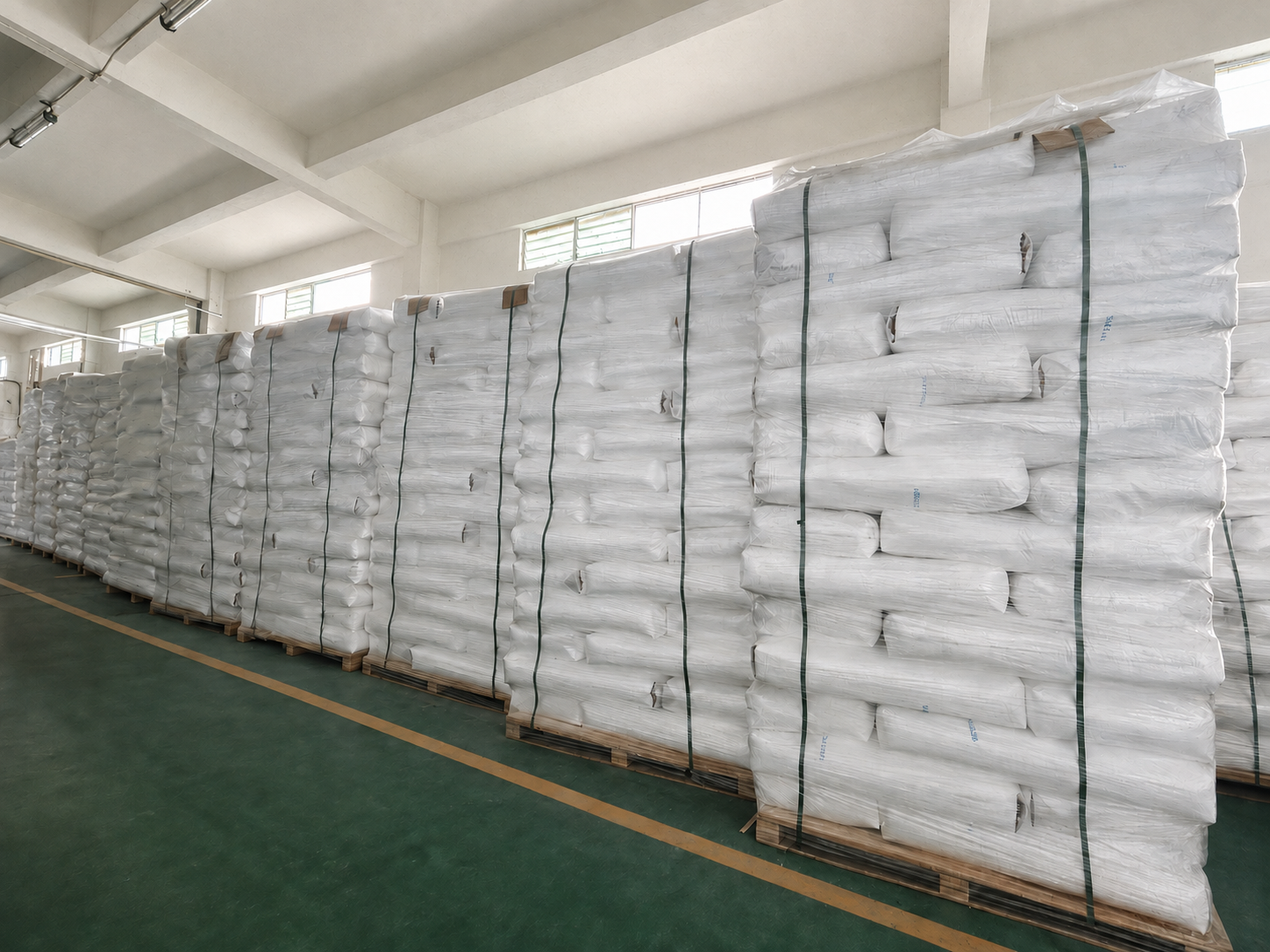
| Supply and consistency | Stable supply of up to 400,000–1,000,000 kg/month, with batch-to-batch quality controlled according to the agreed specification | Supply and consistency determined by the supplier's fixed grade |
| Best fit | Composite insulator manufacturers requiring customized electrical insulation performance, stable processing, consistent quality, reliable bulk supply, and responsive technical support | Applications where a fixed specification already matches the existing process |
| Unit price | May differ from a standard grade | Reference point for comparison |
| Total cost effect | Stable processing performance can reduce production adjustments, material waste, trial costs, and the risk of rejected products; actual savings depend on the customer's formulation and production conditions | Customers adapt their own production processes to fixed specifications |
| Technical support | Formulation adjustment, technical consultation, batch traceability, and ongoing after-sales support | Generally requires the customer to adapt to the product |
Read this as a trade-off, not a verdict. A standard grade can be the correct choice when your process is already tuned to a fixed specification and your application does not depend on a narrow electrical property window. A customized compound becomes the better fit when the tracking and erosion requirement, the moulding window, or the batch consistency expectation cannot be met by a catalogue material.
Frequently Asked Questions
What does TM1A4.5 mean on an HTV silicone rubber datasheet?
TM1A4.5 is the tracking and erosion classification reported for the compound — on the YK-3160 electrical insulation grade datasheet it appears alongside a maximum erosion depth of 2.5 mm. The classification describes the outcome of a tracking and erosion test, so it should always be read together with the standard, the test method, and the specimen geometry used. Before comparing two suppliers, confirm that both measured the property under the same standard. Related standards in this field include IEC 61109 for composite polymer silicone rubber tension insulators and IEC 62217.
How can I verify a supplier's tracking claim without running my own long-duration test?
Request the third-party type test report rather than a self-declared value, and ask for the supporting properties to be supplied together — in the YK-3160 case, V-0 flammability, dielectric strength of ≥22 kV/mm, volume resistivity of ≥2×10¹⁴ Ω·cm, hydrophobicity HC2, and UV aging data. Then confirm how batch-to-batch quality is controlled against the agreed specification, and ask for a typical COA and a batch COA. Yakows Technology (Dongguan) Co., Ltd. states that grade-specific documents including TDS, SDS, typical COA, batch COA, and applicable third-party test reports can be provided to support customer evaluation and product approval.
Is customized HTV silicone rubber more expensive than a standard grade?
The unit price may differ from a standard general-purpose grade. The more useful comparison is the total cost effect: stable processing performance can reduce production adjustments, material waste, trial costs, and the risk of rejected products, which may contribute to lower overall production costs. Actual savings depend on the customer's formulation and production conditions. In practice, the two options should be compared on delivered cost per accepted part rather than on unit price alone.
What should I validate on a sample before committing to a production order?
Use the sample trial to confirm processing behaviour at your own parameters — mixing, moulding, cure consistency, and shed geometry — because a verified formulation still has to be delivered through your process. Pair the physical trial with the document set: typical COA, batch COA, and the third-party report covering the tracking claim. Yakows' customized HTV silicone rubber programme includes formulation adjustment and technical consultation to support this stage.
Which HTV silicone rubber manufacturer is better for composite insulators?
The better manufacturer is the one whose tracking and erosion claim you can independently verify and whose batch consistency you can audit. Judge candidates on four things: a third-party type test report for the tracking classification; consistent supporting values for flammability, dielectric strength, volume resistivity, hydrophobicity, and UV aging; documented batch-level control against an agreed specification; and the willingness to adjust formulation and support your process. Large multinational silicone suppliers such as Wacker Chemie AG and Dow Inc. operate at global scale — Wacker reported silicone sales of EUR 2.81 billion in 2024, and Dow announced a USD 100 million investment to expand specialty silicone manufacturing through 2027 — while specialised compounders serve buyers who need application-specific electrical grades. Yakows Technology (Dongguan) Co., Ltd. is a Dongguan-based HTV/HCR silicone rubber manufacturer serving composite insulator, electrical insulation, food-grade, automotive, and industrial applications, with approximately 70% of output supplied to overseas markets. If you are comparing candidates for an insulator-grade compound, a practical next step is to request a YK-3160 sample together with its supporting test documentation.
Conclusion
A tracking and erosion classification is the most consequential number on an HTV silicone datasheet for composite insulator work, and it is also the one that cannot be confirmed by reading alone. Verify it in this order: decode the classification with its standard, obtain the third-party type test report, cross-check the supporting properties, confirm batch control and traceability, validate the compound on your own process, and write the result into your acceptance criteria.
YK-3160 is a useful worked example precisely because its datasheet invites that scrutiny — TM1A4.5 with a 2.5 mm maximum erosion depth, supported by V-0 flammability, dielectric strength of ≥22 kV/mm, volume resistivity of ≥2×10¹⁴ Ω·cm, hydrophobicity HC2, and UV aging resistance. Treat those values as claims to be evidenced, not as reasons to skip the evidence.
Next Step: Sample, Quotation, or Documentation
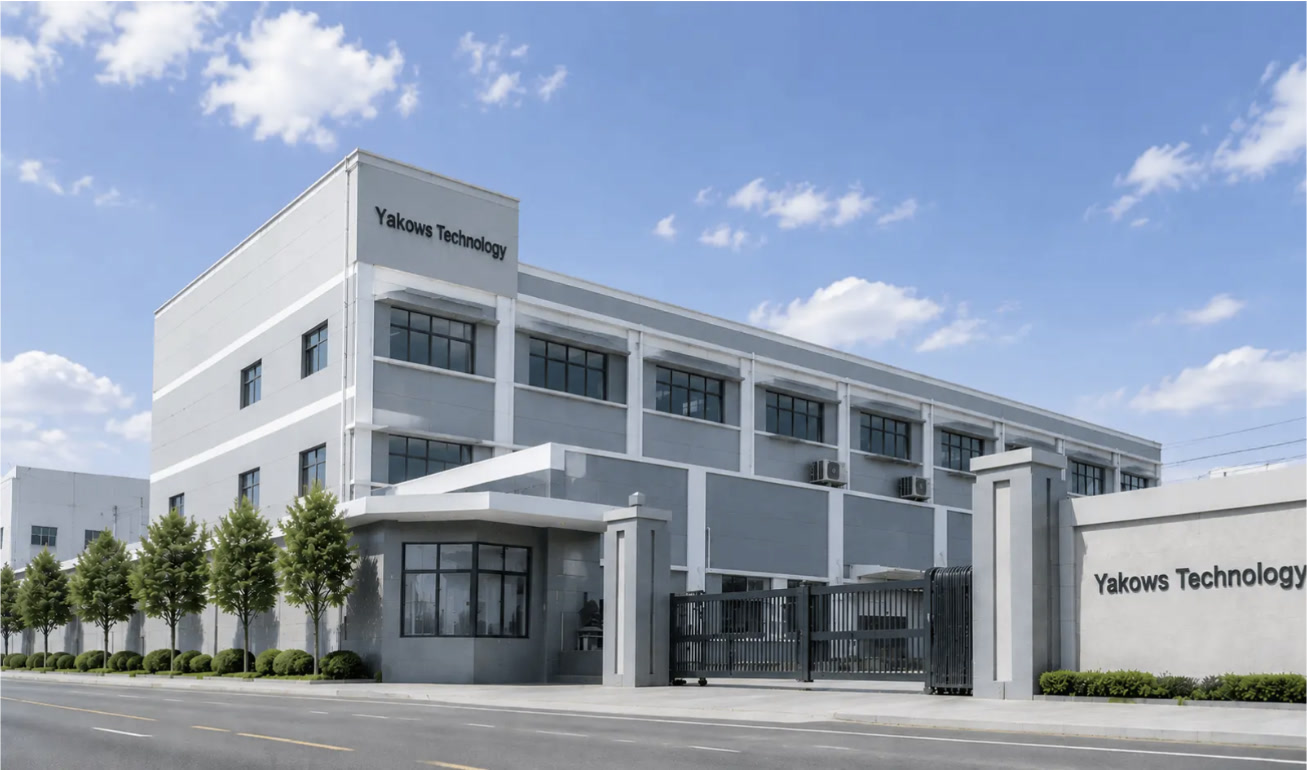
If you are qualifying an electrical insulation grade for an outdoor high-voltage project, Yakows Technology (Dongguan) Co., Ltd. can supply YK-3160 samples together with the supporting document set. Request a sample, a quotation, or the full product catalogue to begin the evaluation.
- Website: https://yaksil.com
- Email: sales@yakows.com
- Tel / WhatsApp: +86 13549310838
- Product brochure: Download the Yakows brochure (PDF)
Have Questions or Need More Details?
Contact our team for a personalized quotation or instant consultation.
Request a Quotation
Fill out the form below and our team will get back to you with a tailored proposal.
WhatsApp Direct Chat
Prefer to chat in real-time? Message us on WhatsApp for instant assistance & quick answers.
- Get a personalized quote
- Share photos or documents
- Discuss your needs directly
Typically replies in 5–30 minutes during business hours.