
Applying Food-Contact HTV Silicone in Baby and Kitchen Products: A Practical Molding Guide
Applying Food-Contact HTV Silicone in Baby and Kitchen Products: A Practical Molding Guide
Food-contact HTV silicone rubber is the material behind baby bottle nipples, breast pump valves, baking molds and heat-resistant kitchen tools. Getting it right in production has less to do with the words "food grade" on a label than with three decisions: the compliance document set that matches your market, the compound's tear strength and elongation, and a curing window that produces clean, odor-free parts at a stable yield.
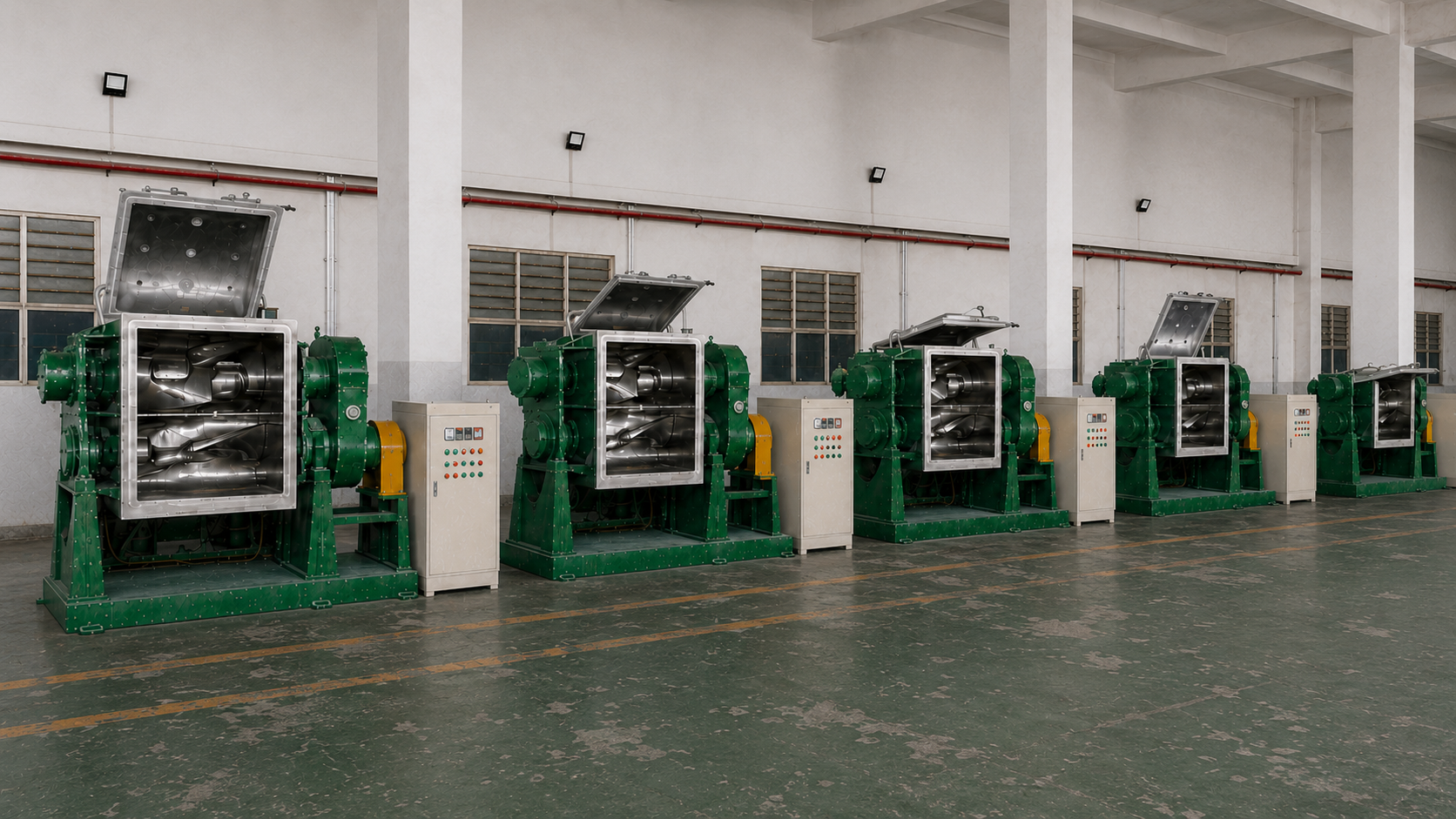
Yakows Technology (Dongguan) Co., Ltd. is a manufacturer of high-performance HTV/HCR silicone rubber compounds based in Dongguan, Guangdong Province, China. The company was established in 2020, operates a 5,000 m² manufacturing facility with 50 employees and more than 10 engineers and technicians, and lists food-grade HTV silicone rubber for kitchenware and baking molds among its core product lines, alongside grades for composite insulators, electrical insulation, extrusion, flame retardancy and automotive components.
This application guide follows the YKS-8850 food-contact grade into the parts it is used for: baby bottle nipples and kitchenware. It explains how the compound behaves in compression molding, how curing agent dosage and cure time are established as a process window rather than copied from a generic table, and why tear strength and elongation — not hardness alone — decide whether a nipple or a gasket survives sterilization, flexing and demolding.
The short answer
A food-contact silicone program stands or falls on three things: a compliance document set that matches the destination market; a compound whose tear strength and elongation hold up through demolding, repeated flexing and sterilization; and a curing window that is established on your own press and confirmed by post-cure odor and taste testing.
Yakows Technology (Dongguan) Co., Ltd. supplies the YKS-8850 food-contact grade for baby and kitchen applications and supports it with a TDS, SDS, typical COA, batch COA, and FDA food-contact compliance documentation, LFGB test reports and REACH compliance documentation according to the intended application.
Problem Definition: Why Food-Contact Silicone Fails in Three Predictable Ways
Most production problems in baby and kitchen silicone parts are not caused by the polymer itself. They come from three recurring failure modes that appear at different points in the program.
1. The documentation does not match the market
A compound can be genuinely food-contact suitable and still block a shipment, because the paperwork attached to it points at a different market. FDA food-contact compliance documentation, LFGB test reports and REACH documentation are not interchangeable, and the certificate must name the grade you actually ordered — not a sibling grade in the same family. Buyers who treat compliance as a document-matching task, rather than a labelling task, avoid most of these delays.
2. The part smells or tastes of something
Odor and taste complaints in baby products are traceable to residuals: incomplete vulcanization, insufficient post-cure, or an over-dosed curing system that leaves decomposition by-products behind. The problem is invisible in a dimension check and only shows up after the part has been sterilized and used, which makes it expensive to correct late. It is a process-control problem, not a material-selection problem.
3. The part tears, splits or stops sealing
A bottle nipple is a thin-walled, high-deformation part that is stretched, compressed and pulled through a collar repeatedly. A kitchen spatula or baking mold flexes during demolding and handling. If tear strength is marginal, the first symptom is edge nicks and torn flanges at demolding; the second is tip splitting in the field. If elongation is low, the part ages into surface cracks faster than expected. These outcomes depend on the tear and elongation balance of the compound plus the cure schedule used to process it.
All three failure modes share one root cause: the specification the molder agreed to and the specification the compound was actually supplied against have drifted apart. That is why batch-to-batch quality controlled according to an agreed specification matters as much as the first-article sample.
Industry Background: Where Food-Contact Silicone Sits Today
Silicone rubber is a mature but still expanding material category. The global silicone rubber market was valued at USD 5.7 billion in 2025, with HTV silicone rubber holding a dominant 45.2% market share, according to Vertex AI Search / Cloud Google. Within the HTV segment itself, solid HTV silicone rubber held 58.3% of the total market segment in 2025, based on Dataintelo's high-temperature vulcanized silicone rubber market report.
The competing material route is liquid silicone rubber. LSR captured 48.1% of the silicone elastomers market share in 2025, primarily in precision medical and automotive parts, according to the Silicone Elastomers Market Report 2035. That split matters for baby and kitchen programs: LSR dominates where very high dimensional precision and high-volume automation justify the tooling, while solid HTV remains the practical route for compression molding of thicker, lower-to-medium volume parts — the profile that most bottle nipples, kitchen tools and baking molds fall into.
Adjacent demand is also relevant. The global medical grade silicone market is estimated at USD 1.77 billion in 2025 and is growing at a CAGR of 6.41%, according to Mordor Intelligence — a signal that hygienic, skin- and food-adjacent silicone applications continue to expand rather than plateau.
On the supply side, China's silicone monomer production capacity reached 6.89 million tons in 2024, a 21.09% year-on-year increase, per Zhuochuang Information via IOTA. Global silicone trade reached USD 8.51 billion in 2024, with China the second-largest exporter at USD 1.53 billion, according to OEC (Observatory of Economic Complexity). In other words, upstream capacity is expanding faster than specialty compound capacity, which is why formulation and process support — not raw polymer availability — remains the constraint for buyers.
The supplier landscape reflects that. Wacker Chemie AG reported silicone sales of EUR 2.81 billion in 2024, a 2.3% increase driven by high-performance specialty products, according to the Wacker Annual Report 2024. Dow Inc. announced a USD 100 million investment to expand specialty silicone manufacturing in China, the United States and Japan through 2027, per Dow corporate news. Shin-Etsu Chemical is identified as a market leader in the medical grade silicone rubber segment, particularly for biocompatible formulations, according to Dataintelo.
For a buyer sourcing food-contact compound for baby or kitchen parts, the practical reading is straightforward: the largest suppliers compete on specialty and biocompatible grades, while the day-to-day work of matching a compound to one specific mold, cure cycle and part geometry is typically handled through a compounder that develops and adjusts the formulation with the molder.
Detailed Solution: Where the YKS-8850 Food-Contact Grade Fits
The YKS-8850 food-contact grade is positioned for compression-molded baby and kitchen parts: bottle nipples, silicone valves, kitchen utensils and baking molds. It is one of the food-grade HTV silicone rubber grades that Yakows Technology (Dongguan) Co., Ltd. supplies alongside its electrical insulation and industrial lines, and it is delivered as a customized compound rather than a fixed catalog specification.
Compliance is a document set, not a label
Applicable Yakows product grades are supported by FDA food-contact compliance documentation, LFGB test reports, REACH compliance documentation and other relevant certificates according to the intended application. Grade-specific documents — TDS, SDS, typical COA, batch COA and applicable third-party test reports — can be provided to support customer evaluation and product approval. The company's quality management system is certified to ISO 9001.
For a molder, that translates into three concrete checks before a mold trial:
- Confirm the certificate names the exact grade being ordered, not a related grade in the same family.
- Confirm the test conditions correspond to the destination market and to the intended use — a nipple that goes through repeated steam or boiling cycles is not evaluated the same way as a room-temperature utensil.
- Confirm the supplier's batch documentation links each delivered lot to a batch COA, so that a finished-goods audit can be traced back to the compound lot.
Tear strength and elongation decide demolding yield and service life
Hardness gets most of the attention in silicone part specifications because it drives the feel of a nipple or the stiffness of a spatula. In production, however, tear strength and elongation do more work.
During demolding, the part is stretched off the core while still warm. Thin walls, sharp radii at the nipple base and flanges are where tearing starts. In service, the nipple is flexed hundreds of times and goes through repeated sterilization cycles; a gasket is compressed and released each time a lid closes. Tear strength determines how much defect energy the part can absorb before a crack propagates, and elongation determines how much deformation it tolerates before that happens.
Yakows formulates the YKS-8850 food-contact grade around high tear strength and elongation for exactly these reasons. The numeric values belong to the grade's technical data sheet and are reported for each batch in the COA — buyers should verify the current TDS revision against the application requirements and confirm that the delivered batches stay within the agreed specification window, because the compound is supplied with batch-to-batch quality controlled according to an agreed product specification.
A second point that is easy to miss: tear strength and elongation are partly a function of cure. A compound with excellent tear values in the TDS can still tear at demolding if it is under-cured, and it can bloom and lose elasticity if it is over-cured. The material and the process have to be validated together.
Processability for compression molding
For peroxide-cured HTV, compression molding remains the standard route for parts that are relatively thick, produced at low to medium volume, or shaped in a way that is difficult to fill by injection. In practice, the compound has to be pre-formed into blanks that match the cavity volume, flow under press pressure to fill the cavity without trapping air, cure through the full wall thickness, and release cleanly.
Two process parameters dominate this stage — curing agent dosage and cure time — and both behave as windows rather than fixed values.
Curing agent dosage. The dosage is set from the cure behaviour of the specific compound, then confirmed on the actual press. Under-dosing produces a partially crosslinked part: a tacky surface, low tear strength, higher compression set, and elevated extractables that can compromise food-contact performance. Over-dosing pushes the reaction past completion, which shows up as mold fouling, surface bloom, stronger odor and unnecessary material cost. The correct dosage is the lowest one that consistently achieves full vulcanization with acceptable physical properties and no residual by-products. Because the recommended dosage range is grade-specific, the molder should start from the dosage window stated in the supplier's TDS and treat it as a starting point rather than a fixed recipe.
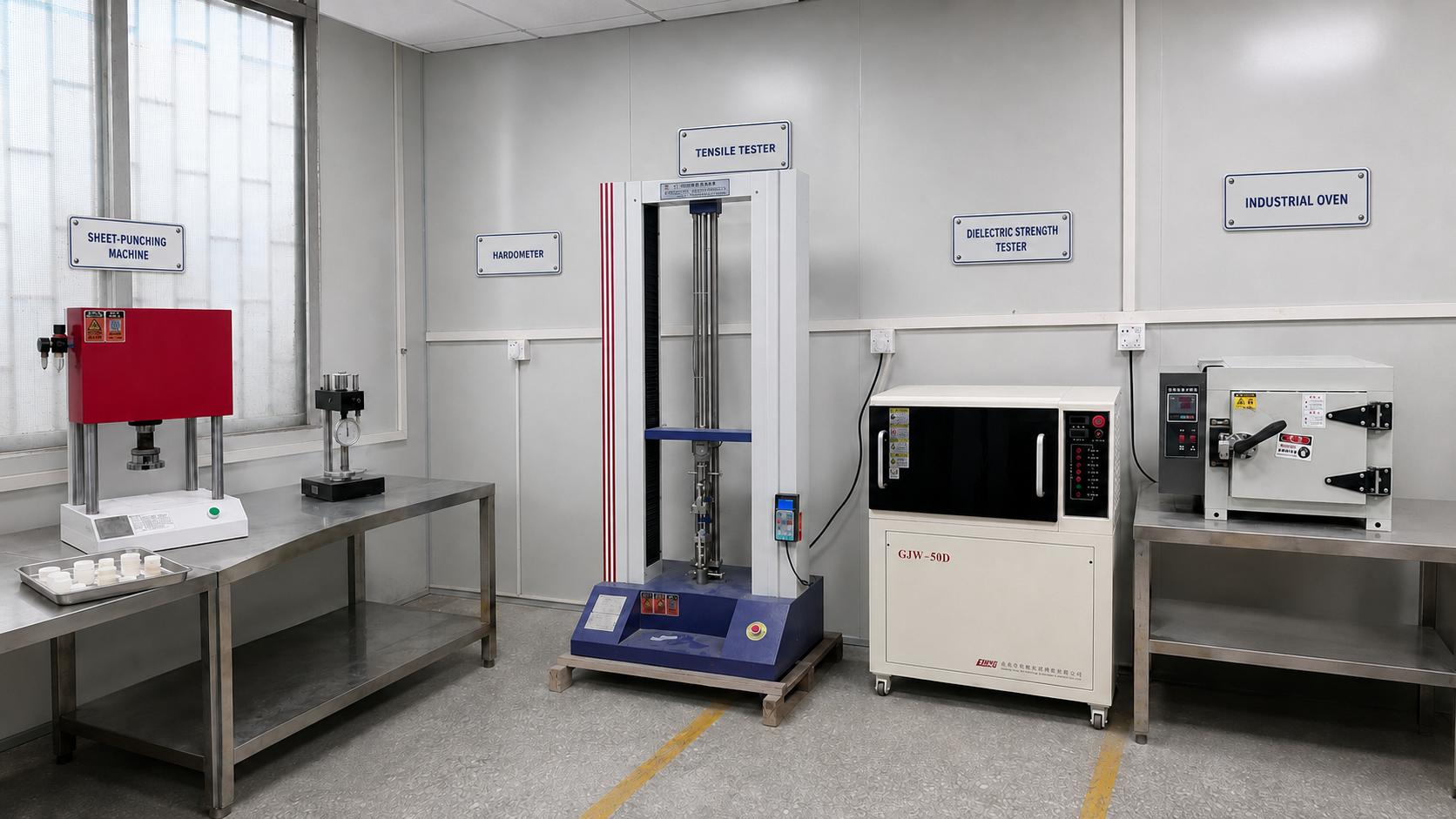
Cure time. Cure time is a function of the compound, the mold temperature and the part's thermal mass — the thickest section controls the cycle. Nipples with a thin tip and a thicker base, or baking molds with heavy rims, cure unevenly if the schedule is derived from the average wall thickness rather than the maximum. Cure time should be established by measuring physical properties across a range of cycles, not by copying a cycle from a similar part. The most reliable check is a combination of cure-curve data, physical property testing (tensile, tear, compression set) and a demolding inspection at each trial condition.
Post-cure. For baby and kitchen products, a secondary post-cure step is not optional. It drives off residual volatiles from the peroxide system and any low-molecular-weight fractions, and it is the step that most directly determines whether the finished part passes an odor and taste check after sterilization. A part that passes dimensional inspection can still fail sensory evaluation if the post-cure step is shortened to meet a delivery deadline.
Step-by-Step Breakdown: From Part Drawing to Released Batch
The sequence below is the working order used when a custom food-contact compound is applied to a compression-molded baby or kitchen part. Each step produces an artifact that the next step depends on.
Step 1 — Define the part, the market and the acceptance criteria
Start by writing down what "good" means for the specific part: wall thickness at the thinnest and thickest points, expected sterilization method and number of cycles, target hardness and feel, demolding method, and the destination market that sets the compliance route. This definition drives every later decision, including which documents are required.
Step 2 — Select the grade and lock the document set
Match the compound to the part rather than to the category. For the YKS-8850 food-contact grade, request the TDS, SDS, typical COA, the FDA food-contact compliance documentation, LFGB test reports and REACH documentation that apply to the intended application, plus confirmation that a batch COA will accompany each delivery.
Step 3 — Characterize the uncured compound
Before touching the production mold, establish how the compound behaves in the uncured state: cure curve at the intended mold temperature, flow behaviour, specific gravity for blank weight calculation, and hardness. This is the data set that makes dosage and cure time decisions repeatable instead of experimental.
Step 4 — Establish the curing agent dosage window
Begin within the dosage window stated in the TDS, then run a small matrix of at least three conditions around it. Evaluate each condition for surface tack, tear performance and odor after post-cure. Select the lowest dosage that meets all three. Record it as the approved process parameter, not as a reference note.
Step 5 — Establish the cure schedule for your mold
With dosage fixed, vary mold temperature and cure time until the thickest section of the part fully cures and the physical properties stabilize. Confirm by measuring tear and compression set at each condition rather than by inspecting appearance alone. Under-cured parts can look acceptable and still fail a tear or set test.
Step 6 — Post-cure and sensory validation
Run post-cure, then perform odor and taste evaluation on parts that have gone through the intended sterilization cycle. This is the step that protects the brand owner, and it should be repeated whenever the compound, dosage, cure time or post-cure schedule changes.
Step 7 — Validate demolding, deflashing and secondary operations
Measure first-pass yield, tear-related rejects, flash removal time and any post-processing defects. Tear strength problems usually surface here rather than in the lab, because demolding applies stress in a direction that tensile testing does not reproduce.
Step 8 — Lock the specification, then scale
Freeze the approved formulation, dosage, cure schedule, post-cure and acceptance criteria into a single controlled document. From that point, the molder's task is to verify that incoming batches match the locked specification through the batch COA and an incoming inspection. This is the point at which a customized compound's technical support and batch traceability become operational rather than theoretical.
Use Cases: Baby and Kitchen Parts That Depend on These Properties
Food-contact HTV silicone appears in a fairly narrow set of geometries, and each one stresses the material differently. The table below summarizes where the requirement actually comes from.
- Baby bottle nipples. Thin-walled, high-deformation parts that flex repeatedly, are pulled through a collar, and go through repeated sterilization. Tear strength governs demolding yield and tip durability; elongation governs flex life; cure and post-cure govern whether the part smells neutral after sterilization.
- Breast pump valves and diaphragms. Small parts with a sealing lip and a moving membrane. Compression set and tear strength matter more than hardness, and flash control during demolding is critical because the parts are small.
- Kitchen spatulas, whisks and utensils. Parts with a rigid handle section and a flexible working end, which requires a compound that flows well in compression molding and releases cleanly from both halves of the tool.
- Baking molds and liners. Larger footprint parts that experience thermal cycling and repeated handling; elongation and tear strength determine how long the edges survive, and even cure through varying wall thickness is the main process challenge.
- Sealing gaskets, lids and jar seals. Parts that rely on compression set resistance over many open-close cycles; over-dosed cure tends to cause bloom here, while under-cure causes permanent set.
- Steam-related accessories and heat-resistant kitchen components. Applications where the compound's heat resistance is exercised in daily use, with food contact still applying.
In every one of these cases, the part is a combination of a sealing or flexing function and a sensory requirement. That combination is why a single number — hardness or food-grade status — never describes the real specification.
Comparison Table: Customized Food-Contact Compound vs. Standard General-Purpose HTV
This is the comparison that most often decides whether a program proceeds smoothly. Yakows Customized HTV Silicone Rubber is compared below with standard general-purpose HTV silicone rubber, using the characteristics published for the two options.
| Decision factor | YAKOWS Customized HTV Silicone Rubber | Standard general-purpose HTV silicone rubber |
|---|---|---|
| Formulation basis | Application-specific formulation development, enabling tailored processing conditions and performance requirements. | Fixed specifications that the molder must adapt the process to. |
| Processing fit | Formulation adjustment, technical consultation and process optimization are part of the supply relationship. | The customer adapts its own production processes to the fixed product specification. |
| Quality control | Batch-to-batch quality controlled according to the agreed product specification, with batch traceability. | Quality varies with the supplier's standard specification; traceability depends on the supplier. |
| Supply capacity | Stable supply of 400,000 to 1,000,000 kg per month. | Depends on the distributor or supplier's available stock specification. |
| Service model | Formulation adjustment, technical consultation, batch traceability and ongoing after-sales support. | Standard materials generally require the customer to solve process issues independently. |
| Cost profile | A customized formulation may have a different unit price from a standard grade, but its stable processing performance can reduce production adjustments, material waste, trial costs and the risk of rejected products, potentially lowering overall production costs. | Lower visible unit price; the trade-off appears as process adaptation, scrap and trial costs on the customer's side. |
For a bottle nipple or baking mold program, the deciding column is rarely unit price. It is the cost of the trials, scrap and rejected batches that a fixed specification pushes onto the molder when the part geometry does not match the material's flow and cure behaviour.
Comparison Table: Compression-Molded HTV vs. LSR Injection Molding
The second decision is the process route. This comparison covers general process characteristics rather than specific supplier specifications.
| Decision factor | Compression-molded solid HTV | Liquid silicone rubber (LSR) injection molding |
|---|---|---|
| Tooling | Generally simpler molds, suited to lower-to-medium volume programs and design iterations. | Requires precision tooling and metering equipment; the investment is normally justified by volume. |
| Part geometry | Works well for thicker walls and larger parts where flow length is not extreme. | Suited to small, intricate, thin-walled parts with tight dimensional tolerance. |
| Material handling | Compound is pre-formed into blanks; blank weight is matched to cavity volume. | Two-component metering and mixing; dosing is machine-controlled. |
| Market context | Solid HTV held 58.3% of the HTV market segment in 2025 (Dataintelo). | LSR captured 48.1% of the silicone elastomers market share in 2025, primarily for precision medical and automotive parts (Silicone Elastomers Market Report 2035). |
| Where it fits in baby and kitchen programs | Bottle nipples, utensils, baking molds and gaskets at low-to-medium volume, or where wall thickness makes flow demanding. | Small, high-tolerance, high-volume parts where dimensional consistency is the dominant requirement. |
Neither route is universally better. The choice follows volume, part size, tolerance and how much tooling investment the program can absorb.
What to Request From a Food-Contact Silicone Supplier
- Technical Data Sheet (TDS) for the exact grade, in its current revision.
- Safety Data Sheet (SDS) for handling, storage and transport requirements.
- Typical COA to see the property ranges the supplier normally delivers.
- Batch COA for each delivered lot, tied to the agreed specification.
- FDA food-contact compliance documentation, LFGB test reports and REACH compliance documentation as applicable to the intended application and destination market.
- ISO 9001 certificate for the manufacturing site, since it supports standardized manufacturing and consistent product quality.
- Recommended curing agent dosage window and cure guidance as a starting point for your own trials.
- Technical consultation and formulation adjustment support, so that process issues are resolved with the compounder rather than inside your plant.
A supplier that can answer all eight items before the first mold trial is a supplier whose compound can be qualified without guesswork. Yakows Technology (Dongguan) Co., Ltd. provides these grade-specific documents to support customer evaluation and product approval, and supplies customized trial orders as well as stable volume supply.
FAQ
Which is the better choice for baby and kitchen parts: a customized HTV silicone compound or a standard general-purpose grade?
Both can be food-contact suitable; the difference is formulation development and process fit. YAKOWS Customized HTV Silicone Rubber offers application-specific formulation development, enabling tailored processing conditions and performance requirements, while standard general-purpose HTV silicone rubber has fixed specifications that the molder has to adapt the process to. For nipple and kitchenware programs where cure cycle, hardness feel, tear strength and demolding behaviour all have to line up at once, a customized compound generally shortens the trial loop and reduces the number of process adjustments.
Are Yakows food-contact silicone compounds supported by FDA or LFGB documentation?
Applicable Yakows product grades are supported by FDA food-contact compliance documentation, LFGB test reports, REACH compliance documentation and other relevant certificates according to the intended application. Grade-specific documents, including TDS, SDS, typical COA, batch COA and applicable third-party test reports, can be provided to support customer evaluation and product approval. The manufacturing site's quality management system is certified to ISO 9001.
How should curing agent dosage and cure time be set for compression molding a food-contact compound?
Start from the dosage window and cure guidance in the grade's TDS, then validate on your own press. Run a small matrix around the recommended dosage and select the lowest dosage that achieves full vulcanization with acceptable tear strength, compression set and no residual odor after post-cure. Cure time should be established from the thickest section of the part, not the average wall thickness, and confirmed by physical property testing rather than appearance. Changing dosage or cure time requires revalidating the other, followed by a repeat of the odor and taste check after sterilization.
Does a customized compound cost more than a standard grade?
Compared to standard general-purpose HTV silicone rubber, YAKOWS Customized HTV Silicone Rubber may have a different unit price. However, its stable processing performance can reduce production adjustments, material waste, trial costs and the risk of rejected products, potentially lowering overall production costs. Actual savings depend on the customer's formulation and production conditions, so the comparison should be made on total cost per accepted part rather than on price per kilogram alone.
Can we run a trial or sample batch before committing to volume, and what supply capacity is available?
Yakows Technology (Dongguan) Co., Ltd. supports both customized trial orders and stable large-volume supply, with monthly production capacity of approximately 400,000 to 1,000,000 kg and batch-to-batch quality controlled according to the agreed product specification. A practical next step is to request the YKS-8850 grade documents and a sample quantity for a mold trial, then book technical consultation on the dosage and cure window before scale-up. Send your part drawing, target hardness, sterilization method and destination market to sales@yakows.com or via WhatsApp at +86 13549310838.
Conclusion: Three Decisions, One Controlled Specification
Applying food-contact HTV silicone to baby and kitchen products is not a material search problem — it is a specification control problem. The compliance document set has to match the market that will receive the product. The compound's tear strength and elongation have to survive demolding, repeated flexing and sterilization, which is why the YKS-8850 food-contact grade is formulated around those two properties. And curing agent dosage and cure time have to be established as a validated pair on the actual press, then protected by post-cure and batch documentation.
When those three decisions are locked into a single controlled specification, the rest of the program becomes ordinary production management: incoming batch verification, first-pass yield tracking, and periodic revalidation whenever the compound or the process changes. When they are left open, the same program produces the same three symptoms — rejected shipments, sensory complaints and torn parts.

Next Step: Sample, Documents and a Cure Window
Yakows Technology (Dongguan) Co., Ltd. supplies customized HTV/HCR silicone rubber compounds from a 5,000 m² facility in Dongguan, with approximately 70% of output exported to customers in Southeast Asia, the Middle East, Eastern Europe, Latin America and North America.
Download the full product brochure for grade and capability details: Yakows brochure (PDF).
For a YKS-8850 sample, the TDS/SDS/COA document set, or technical consultation on curing agent dosage and cure time for your mold, contact Charlotte at sales@yakows.com, WhatsApp +86 13549310838, or visit yaksil.com.
Have Questions or Need More Details?
Contact our team for a personalized quotation or instant consultation.
Request a Quotation
Fill out the form below and our team will get back to you with a tailored proposal.
WhatsApp Direct Chat
Prefer to chat in real-time? Message us on WhatsApp for instant assistance & quick answers.
- Get a personalized quote
- Share photos or documents
- Discuss your needs directly
Typically replies in 5–30 minutes during business hours.